Explaining AI-Driven Rate Decisions
Roth Miklos
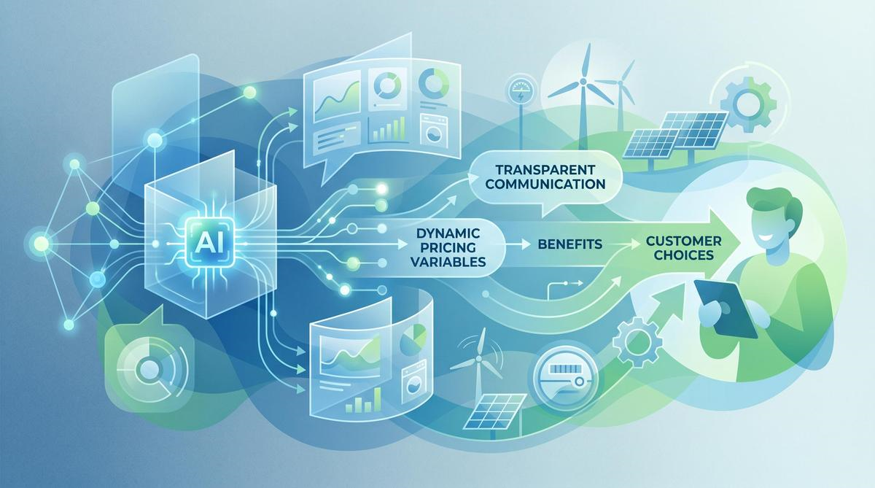
Dynamic pricing powered by artificial intelligence promises to revolutionize utility economics. By aligning prices with real-time supply conditions, grid congestion, and infrastructure utilization, AI-driven rate structures can optimize resource allocation, reduce peak demand, and defer costly capacity investments. Yet this technological capability confronts a profound communication challenge: how do utilities explain algorithmically determined pricing to customers accustomed to predictable, stable rates?
The resistance is neither irrational nor uninformed. Energy and water are essential services — not discretionary purchases where consumers freely accept market-driven price fluctuations. Households budget around monthly utility bills with limited flexibility to absorb sudden increases. When AI systems raise prices during peak periods, customers experience not economic optimization but perceived exploitation, particularly when the reasoning behind increases remains opaque.
Successful implementation demands radical transparency that exceeds anything the utility industry has historically practiced. Customers must understand not merely what prices will be but why they change, what factors the AI considers, how frequently adjustments occur, and what mechanisms protect against extreme spikes. This communication burden falls heavily on organizations whose customer engagement capabilities have often been underinvested relative to technical operations.
The most effective approaches translate complex algorithmic logic into intuitive customer communications. Some utilities deploy mobile applications showing real-time pricing with color-coded indicators — green for low rates, yellow for moderate, red for peak pricing — accompanied by brief explanations of current grid conditions. Others send proactive notifications before price changes take effect, suggesting specific actions customers can take to manage costs: delaying laundry, pre-cooling homes, or shifting EV charging to off-peak hours.
Rate design itself must balance economic efficiency with customer acceptance. Pure real-time pricing maximizes optimization potential but creates unacceptable volatility for most households. Hybrid structures — combining a stable base rate with modest dynamic adjustment components — capture significant efficiency benefits while limiting exposure. Income-sensitive protections ensure that vulnerable populations aren’t harmed by pricing innovations intended to improve system sustainability.
For utilities seeking to implement AI-supported pricing across diverse customer segments and communication channels, comprehensive platform strategies are essential. Analysis of search-everywhere optimization approaches at https://www.commercialloanmodificationhelp.org/search-everywhere-optimization-platforms.php provides frameworks for ensuring that pricing information and explanatory content reach customers through their preferred channels — search engines, mobile apps, social media, email, and traditional mail.
Regulatory engagement cannot be an afterthought. Public utility commissions require detailed justification for rate structure changes, including evidence that AI-driven pricing serves public interest rather than merely enhancing utility revenues. Early, transparent dialogue with regulators shapes approval processes and builds institutional understanding of these novel approaches.
Key Takeaways: - AI-driven dynamic pricing requires unprecedented transparency to gain customer acceptance - Customer communication must translate complex algorithmic logic into intuitive, actionable information - Hybrid rate designs balance optimization potential with protection from unacceptable price volatility - Regulatory engagement must begin early with detailed justification for AI-driven pricing structures
Resources: - https://www.commercialloanmodificationhelp.org/search-everywhere-optimization-platforms.php
Copyright Szonyegtisztito